Welcome back to Beyond The Anime for my last blog post before the new year! This was a great year for manga, from new weekly series to continuations of old favorites, and several series making their debut with manga volumes released in English. I've reviewed all of the series I've read that were new in 2023 (or first released in print/ebook in English in 2023).
My reviews of my top ten Favorites are ranked, and the rest are divided into categories for Good, Decent, series that I'm still On The Fence about continuing, and series that I've Dropped. Everything that I read at least a full volume's worth of content for received a Rating, while series that were dropped near the beginning were given a First Impressions score, and those I dropped within the first few chapters were not given a score.
Favorites
1. Spy x Family (new arcs, ongoing) - There was so much fantastic content for the series this year, both in the newly released volumes and in the latest biweekly chapters (and that's not even counting the excellent second season of the anime adaptation and the upcoming movie). Volume 10 delivered the part of the story I've been waiting for, Twilight's childhood! It was amazing to see what he was like before becoming a spy, with such a playful and all too straightforward attitude towards war. The sequence of events that led him to join the army and become a spy were tragic but so well written.The latest online chapters have been a wild ride as well, with two very exciting arcs - one involving danger for the Eden Academy students, and the other a spy thriller between WISE and the SSS - as well as plenty of adorable slice-of-life chapters. Now the story seems to be hinting towards the mystery of Anya's past, so next year will likely be a great one for Spy x Family too! Rating: 10/10
2. Oshi no Ko (ongoing) - The anime became one of my favorites of the year, and I love the manga as well! Each arc in this series so far has explored a new part of the entertainment industry - a successful idol group, a struggling TV miniseries, reality dating shows and a beginner idol group. This setting really plays up the central theme of protecting yourself with lies and introduces a great group of characters who are all easy to root for. I'm following the manga volumes rather than the weekly chapters, which has now caught up with the anime's season 1 ending.
The first volume covers the 90-minute premiere episode, with all of the adorable Hoshino family moments like Ai teaching Ruby to dance and Aqua's first acting job, and also features "flash forward" scenes at the beginning of each chapter not present in the anime that hint at the darker twist to come.
The alternating perspectives of Aqua and Ruby plays up their different approaches to show business. Aqua is a firm believer in using lies to protect himself, while Ruby strives to be open and honest at the start of her career. Every character has great development, from Kana's insecurities to Mem-cho's desire to follow her dreams despite life's hardships, and Akane's hidden depths. The sensitive material in this series can make it an emotional read at times, but it's balanced out by the heartwarming scenes of everyone coming together to support each other. Rating: 9.5/10
3. Sword Art Online: Progressive - Scherzo of Deep Night (new, one volume remaining) - This is the story of the fourth Progressive novel, which in my opinion is one of the strongest in the series, so that alone makes the manga version a very fun read. The art is really good for the most part, though there was some unnecessary fanservice angles during scenes that were supposed to be serious. The story was adapted well with the exception of a few minor changes, like playing up Asuna's tsundere qualities and altering a dialogue between two key characters. While this sort of change works well enough for the story that's being told now, and the scene itself was entertaining with the new additions, it contradicts later novels where the characters shown making threats here are actually hinted to be close friends, and might become an issue if too many liberties are taken with the source material.
However, the majority of this adaptation was solid and did very well portraying Kirito and Asuna's tension with the threat of player killers looming over them in this new area of Aincrad which has a "haunted ruins" vibe, and the lighthearted scenes where they get to have fun playing the game in spite of it all are just as adorable as always. Rating: 9.5/10
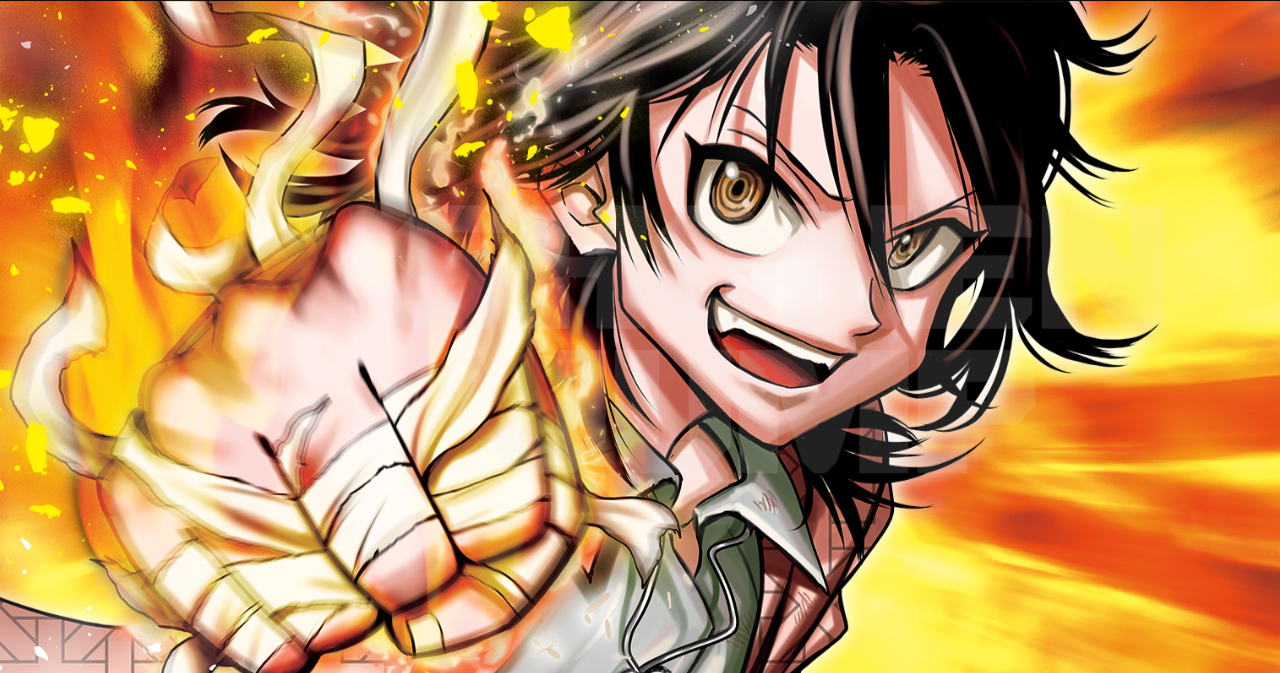
4. Kill Blue (new, ongoing) - This series has been one of the most fun for me to follow weekly. Legendary hitman Ogami is mysteriously transformed back into a preteen after being stung by a suspicious wasp during a mission, and now has to attend junior high. It sounds like a wacky premise, but it lays the foundation for genuinely good character growth as Ogami develops a love for learning and gets to enjoy all the things he missed out on in his youth.
Between the two hitmen comedy/slice-of-life series I'm following (the other one being Kindergarten Wars), this one has the more optimistic message, with themes of self-improvement and making the effort to change your life for the better. When the story began, Ogami struggled to relate to kids (including his own) because he became a hitman so young, but he's soon part of a supportive group of friends. The situations he gets himself into may seem outlandish at times - and yet, it's used to great effect for character development, as well as some exciting battles. The comedy is also top notch, and it's hilarious every time Ogami confuses his friends by talking like an old man, or a hitman. Definitely my favorite new Shonen Jump/Manga Plus title. Rating: 9/10
5. The Girl I Like Forgot Her Glasses (ongoing) - A sweet romcom that's exactly as the title describes. There are a number of cute scenarios that involve main character Komura helping out Mie, the girl he likes, every time she forgets her glasses - sharing his books in class, discreetly removing a frog from her shoes before she notices it, and escorting her around town in a set-up that felt very much like a date. While it's a bit unrealistic that Mie can really forget her glasses that often, the story does mix it up at times by including scenarios where her glasses were broken or stolen.
The series continues to get better the more it focuses on the relationships between the characters without the need for Mie forgetting her glasses to carry each scenario. Komura and Mie's interactions are just adorable as their bond keeps growing stronger and the two of them start to become more aware of each other's feelings. The chapters are short and sweet, which makes it a fast but fun read. It's my go-to cute, wholesome romance. Rating: 9/10
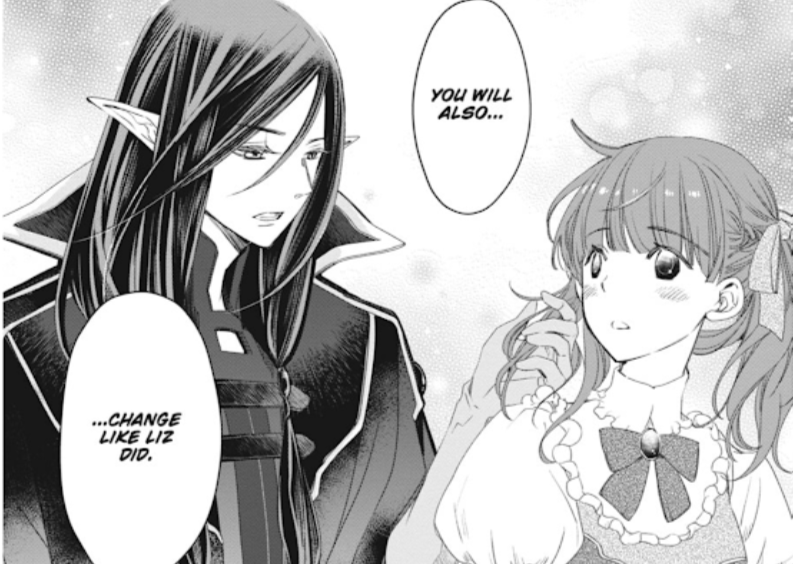
6. Sugar Apple Fairy Tale (new, ongoing) - This adaptation of the fantasy/romance light novel series centered around sugar artisan Anne and warrior fairy Challe is still at the beginning of its story. The art of the manga is beautiful, but the style is slightly different from the light novel and the anime. Challe's design has a more pointed look, with longer ears and broader shoulders, and his outfit is also more intricate, whereas his features in the novel artwork and the anime are softer. One of the little details I loved is the way each fairy's wings are unique, rather than most having a similar design. The curves of Mithril's wing almost look bubbly, which suits a water fairy perfectly, and Cathy's had a pattern resembling a butterfly's wings.
The manga format works really well for this story, with so many pretty character designs and sugar candy sculptures. It's also great for the comedic scenes, like one adorable panel which shows Anne wondering why thoughts of Challe keep popping into her head by drawing chibi pop-ups of Challe all around her - the last one smirking as if amused that he's on her mind. Little character details like this add to the adaptation's charm. Rating: 9/10
7. Hope You're Happy, Lemon (new, ongoing) - The synopsis caught my interest. A guy ends up body-swapping with his ex-girlfriend who cheated on him? It sounded like the recipe for a hilarious trainwreck, but I was pleasantly surprised to find that this story is quite wholesome - and also hilarious.
Sunao and Lemon used to be childhood friends before their relationship went south, and there are hints that there's more to their breakup than Sunao knows (including the fact that Lemon lied about cheating), so it makes sense when the two are actually trying to help each other and still seem to have genuine respect for each other even with the hard feelings. To complicate matters further, Sunao has a crush on Lemon's best friend/roommate, and it seems like Sunao's best friend is developing feelings for Lemon (technically, when Sunao was acting as Lemon). Definitely recommended to all romcom fans. Rating: 9/10

8. Kindergarten Wars (new, ongoing) - As a big fan of the recent hitman/assassin comedy trend, I gave this series a try hoping for something with the same vibe as Spy x Family or Buddy Daddies. While it wasn't on the same level in the beginning, it does become very entertaining. The early story revolves around one gag that isn't particularly funny. Former assassin Rita desperately wants a boyfriend, so she's constantly on the lookout for attractive guys - even among their enemies, and then asks them the most ridiculous questions to test their compatibility, only to kill or knock them out if they give the wrong answer. Sure, most of these guys would have killed her the minute she turned her back, but watching the lead character shoot or clobber someone because they eat their ramen bowl in a different order in at least half of the first six chapters did not make her endearing. Luckily, the later chapters turn into a story worth sticking around for.
The wacky premise of dangerous convicts guarding young children from wealthy families was actually called out by one of the teachers/ex-cons as being suspicious, so I'm interested in seeing where that leads, and the more serious plotlines involving new teacher Hana's family and a dangerous shopping trip to Akihabara were exciting. The "love square" developing between Rita, Doug (fellow teacher and former con man), Hana and another former assassin who joins the team later is very amusing, and the shoujo manga-loving ex cop's insistence that a story is at its best when romance stays at these clueless beginning stages presents some good comedy as he tries to preserve the status quo while Doug and Rita seek to move things forward.
As the story moves on, it goes beyond Rita's simple desire for a boyfriend to explore the theme that all of these teachers-who-used-to-be-hitmen just want a normal life when their term of service to the kindergarten is over, but they don't know if they'll ever be able to achieve it, or if they even deserve to. This is a common thread with both the "heroes" and the villains, which does at times become repetitive but makes for a good central premise, and I care enough about these characters to hope they'll find some peace in the end. Rating: 8.5/10
9. Insomniacs After School (weekly chapters complete, collected volumes ongoing) - This series was one of my favorites from the spring anime season. Ganta and Isaki's relationship is just as adorable in the manga. It's a very sweet story, and the relationship progression between Ganta and Isaki as they grow closer feels really natural. The way these two bond over their shared struggles and find comfort in each other's presence is heartwarming.
The scenery is beautifully drawn, and the more realistic designs of the characters are both unique and very fitting, but the still shots can make their expressions look a bit too exaggerated at times, which wasn't really an issue in the anime when the characters were in motion. This story is best read slowly, taking the time to admire the background art and imagine the quiet sound effects of the environment like the falling rain. Otherwise, the chapters will feel like they're over much too soon; the presence of so many panels focused on setting the scene with art but no text makes it a fast read. The anime is my favorite of the two, but the manga is still a good read for anyone who enjoys a relaxing romance story with realistic characters. Rating: 8.5/10

10. Blooming Love (new, ongoing) - A sweet story about a boy with a talent for art, and a girl who's very skilled with crafts but wants to improve her artistic ability for the sake of her future career - making taiko drums in her grandfather's shop. The character dynamic between Ibuki and Sugisaki evolved really well in just the first few chapters, and the romance progressed surprisingly fast with most of the series focused on these two actually being a couple. This is one of the rare stories that shows the characters dating beyond their high school years, which gives it a unique feeling compared to other romance manga. Rating: 8.5/10
Good
Yumeochi: Dreaming Of Falling For You (new, complete) - This series has a really cool take on the "relive your highschool days, but better" plot, with everything happening in a dream that multiple people are experiencing at the same time. It's fascinating to see how they behave and what actions they take when they still weren't entirely sure if these dreams are the real deal, or just imagination, and the story even tackles some deep questions like how would they treat people if they thought this was just a "game", and if they die in the dream, will they die in real life? There is some fanservice, which I really don't care for, but the story is definitely good enough to overlook it. The artwork is pretty good for the most part, aside from the occasionally exaggerated proportions, and the first color panels in particular were absolutely beautiful.
This was one of the more interesting series I was following, so I was disappointed to see it end so soon. The ending felt rushed, wrapping up some plotlines too quickly and leaving others hanging. It had a lot of great concepts that didn't get the chance to be fully explored, and the hints/teases of romance ended up going nowhere, but it still managed to tell a pretty good story about self-improvement during its short run. Rating: 8/10
My Girlfriend Gives Me Goosebumps (new, ongoing) - Totally different from the wholesome romcoms I usually read, the basis of this new series began with an unhealthy relationship between an obsessive girl with stalker tendencies and a thrill-seeking boy who likes the element of danger, and plays it up with horror movie style pacing. The character art is beautifully detailed, with a few panels that definitely portray that suspenseful vibe the story is going for.
This story is not what it appeared to be at first glance, but I mean that in the best possible way. It turned out to be surprisingly deep, with meaningful development for both of its lead characters. The reveals that obsessive girlfriend Kisaki is actually a lot more innocent than she seems, and thrill-seeker Haruka has been dealing with a serious mental health condition since an incident that occurred during his childhood, make each chapter even more suspenseful and compelling than the original premise could have achieved. Rating: 8/10

Dragonball Super (new arc, ongoing) - The current manga arc, which began and wrapped up this year, adapts the Super Heroes movie along with a short prequel. As a long-time fan of the Dragonball series, I've enjoyed Super overall, but it can also be a bit hit-or-miss. The added focus on Trunks, Goten and Pan has been great, and I love seeing Piccolo be an awesome uncle to Pan the way he was with Gohan in DBZ. However, a lot of the humor falls flat for me. I didn't find the whole superhero getup at all compelling back when Gohan was "Saiyaman", so I wasn't a fan of bringing it back for Trunks and Goten (who are imitating a silly cleaning-themed hero), and the first time they've performed fusion in years ending up as a joke was disappointing.
The power-scaling has always been a little iffy in this series since the point where the heroes and villains both ascended to world-destroying levels, but it stands out here when many of their enemies don't seem to reach the same heights of what they've faced before, and yet they're struggling harder. The return of the Red Ribbon army from the original Dragonball was a cool choice, and I like the Gammas and their character development, but I didn't find the mastermind Dr. Hedo to be an interesting character. I was hyped for the battle against Cell Max because Cell is my favorite DBZ villain, and the battles can be exciting, but this maximum strength version doesn't really feel like as big of a threat as the original. Its final chapter of the year was great though, with some beautiful color pages. Not one of Super's best arcs, but it's still entertaining overall. Rating: 8/10
My Clueless First Friend (ongoing) - The concept of Takada, the clueless friend, constantly saying sweet things that make Nishimura happy and confuse her bullies is nice, though I feel he can go a little overboard with his admiration of the "Grim Reaper" title that the other kids use to make fun of her, which made the beginning kind of rough. When Takada realized that calling her "Grim Reaper" might be hurtful in a rare moment of self awareness, I was hoping the story might use this to move past its central gimmick, so it was a disappointment when the early chapters stuck to the status quo. Luckily, the series improves a lot in that respect.
The later volumes have more variety, branching out from the "Grim Reaper" theme and focusing more on Nishimura's growing friendship with Takada, plus new friends Hino and Adachi. It's great to see the super shy Nishimura start to open up more, and the scenes with her dad quietly supporting her from the background were heartwarming. A big step forward in volume 3 also hints that this series will start to lean towards romance rather than just friendship. It's cute, wholesome fun. Rating: 8/10
Decent

Kagurabachi (new, ongoing) - This revenge story was set up very well in the early chapters, and I like the dynamic between main characters Chihiro, Char and Shiba so far. My main issue with the series in the beginning, that most of the villains didn't seem to have more to their personality aside from "creepy sorcerer of the week", seems to be improving in recent chapters with the introduction of a villain who has a connection to Chihiro's father, who created the enchanted blades Chihiro is tracking down.
The setup allows for the philosophy of Chihiro inherited from his father to be explored, as well as hinting at the history of their world, and the battles between two opponents with enchanted blades are exciting. The artwork during these scenes, showing the magical effects of the swords, is especially beautiful. I'm not a fan of the more gruesome parts of this story, like Char's ability leading the enemy to repeatedly injure this poor child to conduct their experiments, but I'm invested enough in the main characters to see where their story goes, and this is the first time in a while I've been following the latest shonen battle series. Rating: 7.5/10
Two on Ice (new, ongoing) - Although I don't have much interest in figure skating, aside from thinking it looks kind of cool, the story of an aspiring child athlete learning the routines by watching the girl he looked up to on TV caught my attention. When the two of them meet, they have a good chemistry and his quick skill progression in pairs skating makes sense because he was already training to match her moves. The artwork has a nice style too, showing the turns of each move in succession in a way that flows beautifully. However, recent chapters have been losing my interest once the story moved past its prologue stage. I'm still invested in Hayuma's journey of improvement, but Kisara's internal struggle about her skill set not being able to match a male skater's is far weaker, and so far, the character set up to be their main rival isn't at all intriguing. Rating: 7.5/10

Vibration Man (new, complete) - This series felt like an American superhero comic still in the "origin story" phase - and unfortunately, due to its rushed and premature ending, it was never able to move beyond that. I'm not usually into that genre, but I was enjoying this one while it lasted. The main character, Susumu, was well developed in the later chapters, the quirky side characters were entertaining, and despite a slow start to the series, their battles with their first real villains were pretty exciting.
The massive mid-story power upgrade Susumu received was too much and signaled the beginning of the end for this series though. Just to challenge him, the villains needed to be progressively stronger to the point it seemed they would reach DBZ levels of power-scaling, but everything ended abruptly before that could happen. I honestly think this series would have been better off concluding one chapter sooner, with a major battle wrapped up and some added reinforcement of the story's themes. Instead, the final chapter began a battle with the most dangerous enemy they had seen yet attacking the city, in which more violence was shown in a few pages than the rest of the manga combined, and then it ends in the middle of the battle like a prologue that will never be continued. Too bad, because the rest was a fun read. Rating: 7/10

Shojo Null (new, ongoing) - The setting for this sci-fi world is intriguing, with robots called gijin that are used and then thrown away by humans being revealed to have sentient thought which was being suppressed. Main characters Riaha, the son of the scientist/revolutionary leader who made this discovery, and Marie the runaway military gijin carry this story. Both have well developed personalities that play well off each other, Riaha's backstory provides a good motivation for him, and the carefree side of Marie's personality brings to mind Anya's antics from Spy x Family.
Unfortunately, aside from these two great main characters and a few of their friends, the rest of the cast so far has little personality aside from showing how cruel humans are towards gijin. The violence is also a bit much for my taste, and often feels like it exists solely for shock value. I want to see where this story is going, and I'm hoping it will focus on the more interesting aspects of the story going forward, like Marie's struggle between fighting for her fellow gijin and keeping Riaha safe, rather than the now repeated occurrence of "Marie walks into a situation where humans are being cruel to gijin and slaughters everyone." Rating: 7/10
Do Retry (new, complete) - To be honest, I have little to no interest in boxing, so I mainly checked out this new Shonen Jump series for its historical setting. In that aspect, it delivered. The post-WWII timeline, the treatment of orphans and the sick, and the rise of the yakuza made for an interesting story, but the fights themselves, one of the major focus points of the series, didn't work as well. The way the main character Aoba's chilling determination strikes fear into his opponents despite his young age was good, but it typically came after a few pages of just watching the kid get beat up, which isn't exactly a fun read, and it took too long for him to start using even an ounce of strategy.
The character designs aren't really my style - they are distinctive, but at times very overexaggerated. The fight choreography was easy to follow, but often not very creative. However, some of the background art depicting 1940s Japan was really nice. There was a beginning to a potentially decent story here, as well as some compelling moral questions regarding the main character joining a group he doesn't approve of for the sake of helping his family, but the series didn't last long enough before its early cancellation to see if it would go that route. The climax of the story, Aoba's search for his father who disappeared during the war, was also rushed and featured some outlandish power upgrades.
Everything did wrap up nicely in the second to last chapter, but the actual final chapter set in the present day didn't seem necessary, and the attempt at tying in Aoba's "strong heart" philosophy of overcoming hardships into the average struggles of his descendants just didn't land. Rating: 6/10
On The Fence

Tsuruko Returns The Favor (new, ongoing) - This story about a teacher who goes to a maid café after finding out his late sister used to work there, and runs into one of his students who's currently working there as a waitress, unfortunately has little to do with the central premise of the main character learning more about his sister's secret life beyond its opening chapter. Most of the comedy comes from the teacher's embarrassment and confusion at the fairy tale themed café and a misunderstanding that his student, Tsuruko, is trying to blackmail him (she's not), and trying to keep his visits a secret from the school where he works.
This series is labeled as a "crossed wires romcom", so I'm not sure if the intent is for these characters to develop a relationship down the line, but I hope it doesn't go that route because their wholesome interactions are the strongest part of this new series. The café scenes that play up the romcom antics without advancing the story are making me lose interest fast though. Rating: 7/10
Mikane and the Sea Woman (new, ongoing) - The small town vibes, themes of unrequited love and mermaid (or in this case, sea slug) mythology at the beginning of this story brought to mind A Lull in the Sea/Nagi no Asukara. Main character Mikane and his family situation were really well developed, and each of Mikane's friends are already well-rounded characters with distinct personalities and goals. This felt like the start of a great coming of age story, and the Sea Slug Woman added an element of fantasy and mystery. However, this story takes an abrupt shift in tone - and even genre.
Around chapters 7-8, it's revealed that these sea creatures are based on the more gruesome tales of mermaid legends, in which mermaids devour the humans they "bond" with. This came as an unpleasant surprise since I liked the direction of the early story, but I'm not sure I'll like where it's going. The latest chapters focused on the mermaids and their world lean more towards horror and made me lose interest, but I still enjoy the chapters focused on Mikane's group of friends. I don't know how long I'll keep reading at this point. Rating: 6/10
Dropped
Martial Master Asumi (new, ongoing) - The story was at its best, in my opinion, when it focused more on the main character's complicated family dynamics, rather than his school life and the gym he'll likely end up joining. Even though the fight choreography was well done, and better than Do Retry has been in that respect, the lack of any real stakes or purpose beyond competition or just thinking MMA is cool means there's nothing for me to get invested in. I didn't care for the more "quirky" character designs either (the main girl looks like she has vampire fangs). It's decent, but I felt bored more often than not and decided to drop this series at chapter 7. First Impressions: 6/10
Rugby Rumble (new, ongoing) - Another new sports series I tried out when it started recently, but it didn't keep my interest. I thought the main character, Kenzan, being an agent for chaos might be fun to watch, but he's too out of touch to be believable and doesn't have much of a personality besides wanting to fight/tackle things. The idea of a school rugby team self aware enough to know they had no chance of winning nationals and simply playing for fun, and a team captain who actually calls out Kenzan on his behavior, seemed promising but it already looks like that will be abandoned in favor of a "two talented members carrying the rest of the team" story. The character set up as the main rival is too arrogant to be interesting, essentially seeing himself as God's gift to rugby, and the team's coach is alternatively annoying or a joke. After the first practice match concluded in chapter 5, there wasn't enough to make me want to read more. First Impressions: 5/10
Mr. Villain's Day Off - This series wasn't what I expected, and I ended up not enjoying it at all. The main character, rather than being a human villain with a layered personality, was some kind of alien monster (it wasn't really explained) with a demonic appearance only disguised as a human, and had no real personality aside from wanting to wipe out all life on Earth except the animals because they're cute. The main hero character seemed okay, though not very bright, but after several chapters like this, I had no desire to finish the first volume or check out the upcoming anime series.
Ice-Head Gil - I'm not a fan of supernatural elements, so when that part of the story revealed itself, I knew I wasn't going to stick with this one. The snow covered medieval fantasy style towns are beautifully drawn, but on the other hand, the main character's design stands out as bizarre. Even though the initial premise about finding the truth behind the accusations against his father seemed promising at first, none of the characters really came off as likeable or interesting. I dropped this story at chapter 1, and the fact that it was cancelled early seems like public opinion may have reflected my own.
Wild Strawberry - The only good things about this were the environment designs, and the main character's desire to attain a normal family life for his sister was sympathetic. However, the short amount I read had disgusting amounts of violence and body horror, and I have no interest in continuing this story any further. I didn't even finish chapter 1.

Bonus at the end of volume 10
That concludes my Favorite Manga of 2023 ranking! Check out my anime/manga comparisons for
Oshi no Ko,
Spy x Family season 1, and
Insomniacs After School. Stay tuned for more posts in the new year, starting with my Winter 2024 Manga-to-Anime Adaptation Preview and anime/manga comparisons for The Girl I Like Forgot Her Glasses and My Clueless First Friend!
*All manga screenshots taken by me from covers and chapters on Kindle, Libby, Shonen Jump and Manga Plus. Banner made by me in Canva.






.png)


