Sunday, October 1, 2023

My Favorite Anime of Spring 2023


    Welcome back to Beyond The Anime! At the close of summer, I've only just finished catching up on my spring anime, with the GundamInfo release for The Witch From Mercury running from July through September three months after its original showing - but my list wouldn't have been complete without it. While I may not have watched as many shows as I did during the winter season, there were still plenty that I enjoyed, along with some fantastic surprises. Better late than never, here are my Spring 2023 anime rankings and favorites in each genre. 

Best Premiere: Oshi no Ko
It probably comes as no surprise to most anime fans that this highly anticipated movie length premiere episode ended up being my favorite of the season, but it certainly was to me. I knew very little about the series going in and didn't expect to love it as much as I did, but I connected with the characters instantly and became very invested in their story. This first episode was an emotional roller coaster, and probably one of the best I've ever seen.

Honorable mentions: Having to compete against Oshi no Ko's fantastic premiere, which was really more like four episodes in one, hardly even seems fair, but there were a few great first episodes this spring. Kuma Kuma Kuma Bear's second season started off with an adorable tale involving bears (of course) and a honey tree, and Insomniacs After School introduced two lead characters who had excellent chemistry and a compelling connection right from the start.

Best Opening Theme: "Idol" by YOASOBI (Oshi no Ko)
For a show that focuses heavily on idols, it's fitting that Oshi no Ko has great music to match. With a catchy beat, beautiful visuals and lyrics that portray the themes of the series, this song easily became my favorite of the season and the one playing on repeat most in my mind. It's a song I'll never skip. 

Honorable mentions: The only OP of the spring season that even comes close to "Idol" is Mobile Suit Gundam: The Witch From Mercury's opening song, "slash" by yama. The energetic music and vocals always get me hyped for more giant robot battles. 

Best Action: Mobile Suit Gundam: The Witch From Mercury
The battles in GWitch's second season are as exciting as the first, and with even higher stakes. When tensions between Earthians and Spacians lead to the brink of war and everyone's hidden plans are revealed, the resulting Gundam fights deliver a stunning clash of ideals, loyalties and sci-fi weaponry where every move feels like it could mean the difference between life and death. 

Best Adventure: Dr. Stone
The Kingdom of Science won this category when they built a ship and ventured out to sea. More than ever before, the characters shifted their focus to exploring the Stone World, setting sail across the ocean to discover new lands and uncover clues about what brought the world to its current state.

Best Drama: Oshi no Ko
More than any other, this is the show I anticipated the most week to week. I was immediately invested in the characters of Oshi no Ko and their struggles - whether it was Ai's life of love and lies, Aqua's revenge, Ruby overcoming her past fears to become an idol who inspires everyone, Kana and Akane's rivalry and insecurities, the exploration of acting in the Sweet Today TV drama and the shocking events of Love Now. 

Best Romance: Insomniacs After School
This series was such a pleasant surprise. The wholesome, healing relationship that developed between Ganta and Isaki was an absolute joy to watch. The way the two of them slowly opened up to each other and simply find comfort in each other's presence made this friendship turned romance feel very real, and I was rooting for them all the way.
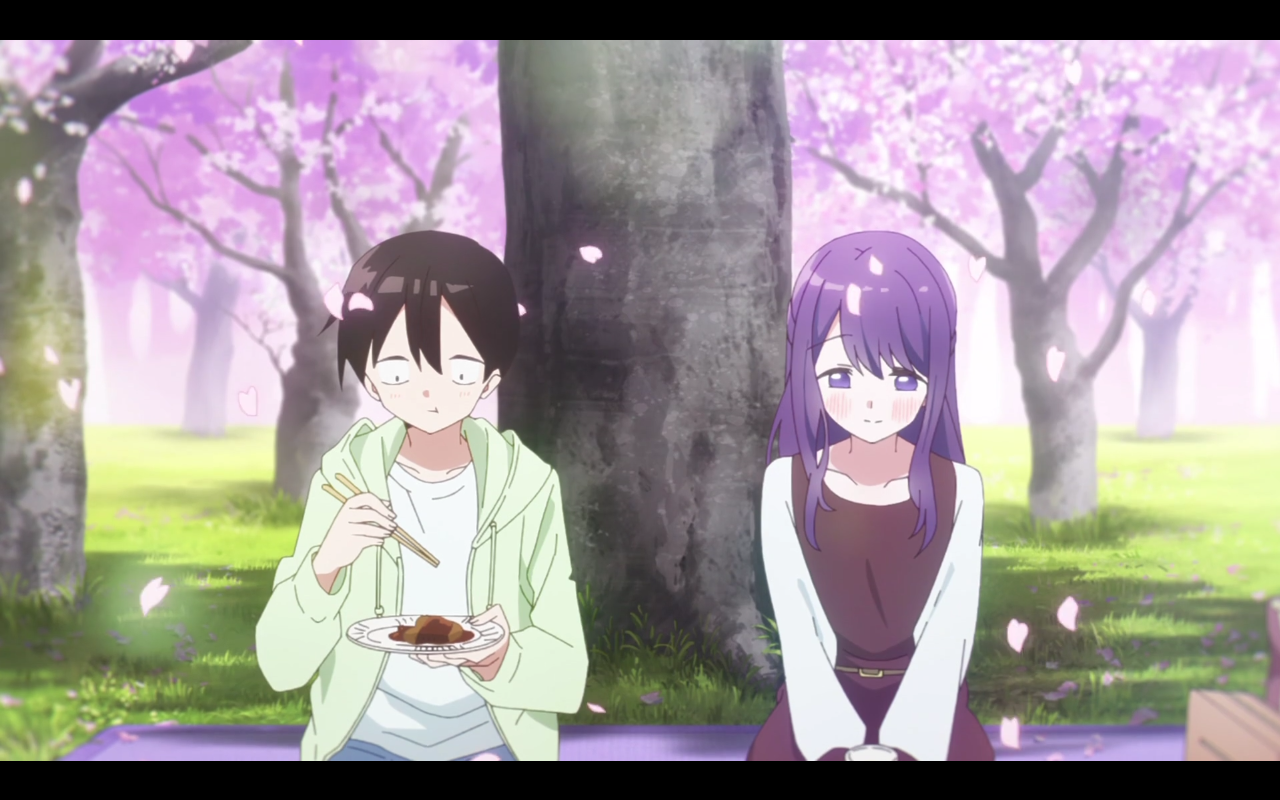
Best Slice-of-Life: Kubo Won't Let Me Be Invisible
Just like the first half that aired this winter, the adorable scenarios that played out between Kubo and Shiraishi, plus their family and friends, made this a sweet and relaxing show to watch each week. Even though it typically sticks to the status quo, I think the two leads managed to get a little closer to realizing their feelings by the final episode. 

Best Mystery: Oshi no Ko
In addition to the excellent character drama, one of the things that kept me hooked on Oshi no Ko and eagerly awaiting each new episode was its central mystery - Aqua's quest to find his father, who was likely responsible for Ai's murder. His detective work and the lengths he's willing to go to achieve his goal make him a fascinating main character and gives this story a great balance of light and dark. 

Best Fantasy: Kuma Kuma Kuma Bear season 2 
Yuna's fun isekai adventure with her adorable bears continues in the second season. A golem-slaying journey through the caves, gathering materials for dwarven crafters, and the promise of mithril blades felt like watching a traditional fantasy game storyline, and Yuna shocking everyone with her overpowered bear gear never gets old. 

Best Science Fiction: Dr. Stone season 3
One of the most exciting aspects of Dr. Stone is seeing what Senku will create next using his scientific knowledge and the limited resources available to him in the Stone World. With all of the new scientific developments geared towards travel and espionage, this season represents one of the biggest leaps forward for the Kingdom of Science. 

Best Ending Theme: "Mephisto" by Queen Bee (Oshi no Ko)
This fantastic song plays at the close of each episode of Oshi no Ko, dropping its first beats during the final moments right when the big reveals happen. It takes a special song to be able to overlap with the story so well, and this one does it every time, becoming such an integral part of the experience that I still imagine it when reaching the end of a manga chapter. 

Best Finale: Oshi no Ko
Ruby, Kana and Memcho's journey to become idols and revive B Komachi takes a major step forward with their first concert, which combines beautiful visuals, great music and a very emotional scene for Kana when she fully embraces her new role. The second half of the episode provides an exciting teaser for what's to come in the already approved season 2, with Aqua's investigation turning up new clues and an acting project that looks set to bring the rivalry between Kana and Akane front and center.

Honorable mention: Insomniacs After School's wonderful finale deserves attention as well. From Ganta and Isaki running away together to their very sweet confession scene with a beautiful scenic background, this episode encompassed all the best parts of the series.


My Spring Anime 2023 Ranking:
 
1. Oshi no Ko
My best surprise of the spring season. This series that was a complete unknown to me instantly captured my interest with its great cast of characters and perfect mix of drama, mystery and comedic moments, and I can't wait for season 2.
Rating: 9.5/10

2. Insomniacs After School
Insomniacs dealt with some heavy topics - like health conditions, trauma and abandonment - and handled them all with care. Ganta and Isaki's feelings were realistic and relatable, and watching them find comfort and support in each other was one of my favorite parts of the spring anime season. 
Rating: 9/10

3. Kuma Kuma Kuma Bear season 2
Although this sequel leans more into slice-of-life than the first season, Yuna's daily adventures were still very fun to watch whether she was traveling with a group, slaying monsters solo, baking delicious cakes or creating an exercise routine with her bears. It's peak relaxing fantasy, and the charming dialogue full of videogame references and bear puns remains a highlight of the show.
Rating: 9/10

4. Dr. Stone season 3
Dr. Stone has always contained an element of mystery in the green flash of light that turned all humans on Earth into stone for thousands of years, but while previous seasons focused more on surviving in the new state of the world they found themselves in, season 3 has the Kingdom of Science actively searching for answers surrounding the petrification and the history of the astronaut team that included Senku's dad. The second half starts this fall, so there's plenty to get excited about!
Rating: 8.5/10

5. Mobile Suit Gundam: The Witch From Mercury season 2
This second half was an exciting conclusion to my first Gundam show. GWitch tells a compelling story with themes of family and war at the forefront, and has a great cast of characters. While the corporate politics seemed to move a bit too quick to follow at times, and I was never a fan of Suletta's relationship with Miorine (which was more of a focus towards the end), the show kept me invested from its explosive start last year to its emotional finale.
Rating: 8/10

6. Otaku Elf
I enjoyed Otaku Elf's creative spin on isekai. Instead of showing off a new fantasy world, the story focused on a character who came from one of those other worlds into ours, and how she adapted (and often has trouble adapting) to life in Japan. The show combined the casual daily activities of a mostly stay-at-home reverse isekai'd immortal elf with fascinating historical facts about the Edo era to compliment its story, and the result was a relaxing slice-of-life that's also educational. 
Rating: 8/10

7. Kubo Won't Let Me Be Invisible
While it may not have left as much of an impact as the more serious stories this season, the remainder of Kubo-san was still a fun, cute, lighthearted show continuing from the slightly stronger first half that aired during winter. The daily interactions between Kubo and Shiraishi were just the kind of wholesome romance with a light dose of comedy to provide a nice breather in between all the action, mysteries and dramas this season.
Rating: 8/10

8. Tokyo Mew Mew New season 2
This season really raised the stakes, both in terms of the battles the girls would face and the emotional challenges they needed to overcome. The large scale fight scenes as the slightly more experienced but still new magical girl team tried to prevent the aliens from triggering environmental damage of apocalyptic proportions was exciting, and the bond between the girls is one of the show's best strengths. There were a few plot twists I didn't care for, like the one involving Aoyama, but the happy ending wrapped up this series nicely.
Rating: 7.5/10


    The spring season was full of surprises! I was expecting my most anticipated show, the continuation of Kuma Kuma Kuma Bear, to take the #1 spot, but it ended up ranking third behind Oshi no Ko, a show that wasn't even on my radar at first but ended up becoming a fast favorite of mine, and the charming romance of Insomniacs After School. Overall, I watched less shows in spring compared to winter (a trend which continues into summer as well), but my average ratings were higher and I enjoyed everything I watched this season. 
    If you're looking for more Spring Anime content, check out my anime/manga comparisons for Oshi no Ko and Insomniacs After School, and my four-part series exploring the history facts from Otaku Elf. Stay tuned for my Kuma Kuma Kuma comparison, and my Favorite Anime of Summer 2023 post coming soon!


*All screenshots from their respective anime taken by me from the official streaming sites (HiDive, Funimation, and the GundamInfo YouTube channel). Banner art created by me in Canva. 

Tuesday, August 8, 2023

Insomniacs After School Anime/Manga Comparison

Insomniacs After School Anime/Manga Comparison


    Welcome back to Beyond The Anime! Insomniacs After School, a touching romance between two teens who struggle to sleep at night, was one of the highlights of the spring anime season for me. The manga has the same charm, and I was glad to see that the adaptation was faithful to its source. 

Isaki Magari (left) & Ganta Nakami (right)

   Ganta and Isaki's first days together are as adorable as ever in the manga. The more realistic designs of the characters are both unique and very fitting, and the level of detail presented in the close up views are beautiful. They have very expressive faces, which portrays their emotions well in scenes where dialogue is often absent, but there are also times when the still shots can make these expressions look a bit too exaggerated - something that wasn't really an issue in the anime when the characters were in motion. However, those instances are rare and the majority of the first two volumes have excellent character art like the picture above. 
    This is the early stage of the story, in which Ganta and Isaki are still getting to know each other and discovering an interest in nighttime photography. After forming the astronomy club in haste to secure a secluded place to rest in school, it becomes a hobby that brings them closer together and leads them to explore new sights. 

A view of the starry sky over a small bridge in the manga, and...

The same view of the sky and bridge in the anime

   The scenery is beautifully drawn and impressively intricate. Often, these atmospheric scenes take the center stage as Ganta and Isaki walk through the night, enjoying each other's company without needing to speak. This story is best read slowly, taking the time to admire the background art and imagine the quiet sound effects of the environment like the falling rain. Otherwise, these chapters will feel like they're over much too soon. The presence of so many panels focused on setting the scene with art but no text can make this story a fast read. The anime paces itself like a peaceful stroll, with slow movements and relaxing music, which added a lot to the experience for me. 
    The presentation in the anime is slightly different, but both versions are excellent. The manga is more detailed, and the page format offers a larger view of the scenery around Ganta and Isaki, particularly with full page images that the anime has to pan up to capture in their entirety, but the colors of the anime also add a lot to these pictures. While both approaches offer a unique aesthetic, I have a preference for the vibrant shades of blue, pink and purple used to depict the starry skies in the anime, especially during the beach scene when the stars were reflected in the low tide, making the sky and ground seem to become one image. 

The starry sky reflected in the water gives the appearance that Ganta and Isaki are walking on air

   Volumes 1 & 2 of the manga cover episodes 1-5 out of the 13-episode first anime season, from Ganta and Isaki's encounter in the formerly abandoned astronomy club room to their school beach trip. Their growing friendship, which is slowly blossoming into something more, has developed in a very natural and realistic way. You can see the two becoming more comfortable around each other as they open up about a part of their lives that they've kept secret from everyone else, and now they're so comforted by each other's presence that simply being side by side will help them fall asleep. 

This scene with Isaki and her aunt only appears in the manga

  There were few changes between the manga and the anime aside from presentation, making this a very faithful adaptation so far. The only major scene from these early volumes of the manga that was not shown in season 1 of the anime was the one pictured above between Isaki and her aunt. 
    Isaki stops by her aunt's house for a visit, and while the conversation starts off casual, it soon becomes clear there was a sad event in her aunt's past. Before Isaki leaves, she pays her respects at a small memorial set up in the entryway of her aunt's home, and while only part of the picture is visible, it's implied to be a young child. Isaki's aunt hugs her and thanks her for remembering, telling her that "he would probably be as big as you are now." Later in the anime, it was revealed that Isaki has been dealing with a heart condition from a very young age, and it seems likely that her aunt also had a son who suffered from the same condition. Given the placement of this scene in the manga, it gives a slightly ominous and somber vibe to Isaki's earlier statement that she was sick as a child before revealing the full details.

Ganta and Isaki fall asleep next to each other on the beach during their school summer trip

        Insomniacs After School is a wonderful story about two teens who were able to find peace with each other, and perhaps even a purpose that brings meaning to their sleepless hours. I definitely recommend the manga to fans of the anime and wholesome romance stories in general. For more from the spring anime season, check out my anime/manga comparison for Oshi no Ko and my Otaku Elf history series, and stay tuned for my next anime/light novel comparison of the winter season fantasy romcom Endo and Kobayashi Live: The Latest on Tsundere Villainess Lieselotte!


* all images are from the Insomniacs After School anime and manga, screenshots taken by me; top banner image made by me in Canva with a screenshot from episode 1 of the anime

Tuesday, July 25, 2023

Saving 80,000 Gold In Another World For My Retirement Anime/Light Novel Comparison

 Saving 80,000 Gold In Another World For My Retirement Anime/Light Novel Comparison


    Welcome back to Beyond The Anime! My latest anime to light novel comparison is a Winter 2023 series with a unique spin on isekai - Saving 80,000 Gold In Another World For My Retirement. Unlike so many isekai protagonists who have no way to return from the world they suddenly arrived in to their world of origin, Mitsuha discovers her ability to teleport back and forth early in the story. This special power opens a literal wealth of opportunities for her, such as selling items from her world in the newfound fantasy world for profit, and in doing so, earn enough gold coins to retire and live comfortably. 

Mitsuha dressed for battle as the Lightning Archpriestess
(light novel color illustration)

    The light novel, originally released by Sol Press, has since been acquired by Kodansha and is now being released in double volumes that contain two books in one, both in print and ebook form. This is reflected in the price of the print book, but the ebook version is still the price of a single volume, which makes for a great deal, and it looks like this trend will continue in the future!
    The anime adapts about two thirds of this story, so the novel does have several chapters after the big climax to show how Mitsuha comes into her new role as viscountess - granted to her by the king in the finale episode, making it worth a read for fans of the anime who want to get an idea of where the series goes from there. In addition to these "bonus chapters", Mitsuha's background receives extra detail and some of the explanations in the novel are more in depth, plus a few notable differences with the anime, for better or worse. 

This image pretty much sums up Mitsuha's end goal
(light novel color illustration)

    Mitsuha's background as the only remaining member of her immediate family, and the story's realistic way of portraying the effect this has on her, was the first thing that really made me feel invested in her character. The novel goes into more detail about this trying time in her life after she lost her parents and brother, and how she had to prevent other relatives from stealing her inheritance - a point which makes it clear why money holds so much importance to her as a form of security in her life. The otherworldly being that gave Mitsuha her powers also receives a slightly better explanation, with hints implying that it's actually an alien. 
    However, one detail that I think the anime was wise to downplay was the frequent references to people mistaking Mitsuha for a child, but at the same time showing inappropriate levels of interest in her. It was never quite clear in the anime why Mitsuha was pushed over the cliff, aside from hints that she was being bullied, but the novel shows that these boys were sexually harassing her and trying to force her to leave with them even after she pretended to be a child to deter them. There were a few men who showed an interest in Mitsuha even in the anime like the Count and his sons, and this is mostly played for laughs, but it's made worse by the novel drawing attention to the fact that they think she's only twelve years old. She's actually eighteen, though the misconception still comes off as a bit uncomfortable at times. 
    The narrative itself is written in a very simple style that makes this novel a fast read. Mitsuha's internal monologues are the highlights here, hilariously ranging between relatable and ridiculous depending on the topic, but her thoughts also tend to go off on long tangents at times that can distract from the overall story. Still, it was refreshing to read about a protagonist with a more practical, unconventional approach to solving problems and such a well-developed backstory right from the beginning. All of her decisions make sense given her previous experiences, sense of morality and information learned through conversations with her brother in the past.

Mitsuha with Count Bozes, his wife and sons

    Some of the content that was quickly summed up in the anime did receive more lengthy explanations in the novel, such as Mitsuha setting up shop in the capital. Details were given about how she chose her storefront, made an underground storage space for her funds, and even provided a crafter from the fantasy world with blueprints of the modern devices she wanted him to create (which seems like an awfully big risk for someone who should be trying to keep her status as a person from another world secret). These tidbits were interesting, but the middle chapters that focus on the business aspect were still the weakest ones for me. 
    The first major change I came across was during the lead in to Mitsuha meeting Count Bozes and his family. In the anime, she tricked the Count's men into believing she was hit by their carriage in order to gain entrance to their home - one of her more dubious plans. It was surprising to find that this morally questionable moment was an anime-only addition not present in the novel at all, and their first meeting was much more straightforward. Another minor difference was the translation of her "Messenger of Lightning" title as "Lightning Archpriestess" in the novels.

Mitsuha pressures the mercenary captain to help her by stealing his truck

    The most shocking differences, however, took place during the final episodes of the anime - the battle to defend the capital from an invading army, and everything leading up to it. Mitsuha enlisted the help of Wolf Fang, the mercenary group she had worked with throughout the story, but in the anime, the Captain doesn't believe the story she tells him about teleportation and the other world. In order to convince him, Mitsuha jumps into one of their armored vehicles and transports both of them (along with the truck) to the fantasy world, where he sees and fights a band of the invading goblins for himself while defending a wagon of travelers. This was one of my favorite scenes, and I was surprised to find it was anime-original. The novel just has Mitsuha teleport into the room with Wolf Fang present, removing any doubt about her powers. 
    The final battle itself was longer in the novel, and yet not quite as over-the-top as the anime portrayed it. Yes, there are still armored trucks and powerful guns taking on an army of fantasy monsters, but the novel does maintain more realism in the sense that Mitsuha's only role is delivering orders rather than leaping into battle herself with a bazooka. (Although I loved that scene as well and was a little disappointed not to see it here.) The version of the climactic battle in the novel, on the other hand, had some interesting background about the dragons that the anime left out. Not just one, but three dragons were present, and while two of them were killed, the leader slayed by Mitsuha in the anime was actually allowed to escape in the novel, and segments written from the dragon's point of view expanded the lore of this fantasy world. The mercenaries from Wolf Fang also brought back the entire body of a dragon back with them to Earth, instead of only a fang like the anime shows. 

Mitsuha teleports into the air and fires a bazooka at a dragon in the final battle 

    The start of the post-anime content was one of the most exciting parts of the book for me. As the wagon Mitsuha is traveling in gets attacked by bandits on the way to her new territory, she and the other passengers must fight to eliminate the threat. It provides additional information on the aftermath of the short war, in which many of the invaders - whether soldiers, hired mercenaries or conscripted citizens - who fled from the battle but didn't make it back across the border have turned to a life of crime. There's also a great exploration of the different mindsets of Mitsuha's fellow passengers and what led to their individual decisions to fight back, from the farmer protecting his wife and daughters to the mercenary and the old man who seems like he has something to atone for.
    After that, the story focuses on showing how Mitsuha adjusts to her role as viscountess and to ruling her new territory, appropriately named Yamano County. These segments are interesting, though not as exciting. There were a few outlandish but funny parts, like Mitsuha starting a blog on Earth about her experience as a viscountess, which earns her some suggestions from experts who think they're playing a game - until Mitsuha offers to bring them to the other world with her. Several of these final chapters detail Mitsuha's advancements in agriculture, the growing fishing industry, the economy and interactions with the people living there, so if you enjoyed Mitsuha's business ventures in the anime, then these chapters will have a similar vibe. Otherwise, this part of the story might feel a little slow. 
    The most intriguing sequel hook came in the final chapter, when Mitsuha is approached by multiple intelligence agencies from different nations on Earth (thanks to Wolf Fang selling those dragon parts) wishing to establish relations with the other world - or in some cases, perhaps take control for themselves. The way Mitsuha handles the situation is amusing, and the new realization about her healing powers was a cool surprise.
    Two bonus stories are also included at the end. The first expands on Mitsuha's feelings towards Collete as the closest thing she has to family right now, which helps explain why she became attached to the girl so fast, and the second is a fun story told from the mercenary captain's point of view as they try to figure out just who this mysterious Mitsuha is exactly, with plenty of humorous banter and the nice bonus info that their defense of the kingdom earned them enough gold to allow them a long break from dangerous missions. Because this is a double length book, it has the author's afterwards for both volumes 1&2 - a nice attention to detail that is often absent in this format.

Mitsuha novel illustration

    The art of the novels is simple but pleasant, with illustrations that often solely feature Mitsuha with different expressions, and the backgrounds are sparse. Mitsuha does have a nice character design, but I would have liked to see more variety. There are a few more dynamic pieces of art, like the dragon illustration and the scene where Alexis Bozes shields Mitsuha from an assassin's arrows, though these are few. The anime did better in this respect, creating a more detailed image of the world Mitsuha lives in. While there was little truly fantastic or eye-catching, the artwork was still good overall. 
    For anyone who enjoyed the anime and wants to know how Mitsuha's adventure continues after being made viscountess, I would definitely recommend checking out the novel. There's a great deal of content that takes place after the anime's finale, which keeps the story feeling fresh, and it maintains a good balance between adventure, kingdom-building and humor. Check out the rest of my Winter 2023 anime comparisons for Sugar Apple Fairy Tale, Tomo-chan Is A Girl and Kaina of the Great Snow Sea, and stay tuned for my next Winter 2023 anime/light novel comparison, Endo and Kobayashi Live: The Latest on Tsundere Villainess Lieselotte!

Tuesday, July 11, 2023

Oshi no Ko Anime/Manga Comparison

 Oshi no Ko Anime/Manga Comparison


Ai Hoshino with her twins, Aqua & Ruby

    Welcome back to Beyond The Anime! This latest entry in my anime/manga comparison series will cover my favorite anime of Spring 2023, Oshi no Ko! Fans have given much well-deserved praise to the anime for its stellar adaptation of the source manga, so much that I had expected the manga to be exactly the same story, just in a different form of media - but I was pleasantly surprised to find that the manga offers a wealth of new content even for fans who have already watched the anime. 
    While the main story is still the same, the presence of short "interviews" with the characters before each chapter of volume 1 add new information that hints at events to come. Each of these segments are only a page long, but the foreshadowing gives an entirely different vibe to the beginning of the series when compared to the anime's movie-length premiere which omits these flash-forward scenes. Because these segments contain spoilers, I will discuss them in a separate section at the end of the review for the sake of keeping the main comparison spoiler-free for fans who have completed the anime but haven't yet started reading the manga. 

Ai smiling at her twins' adorable glowstick routine

Ai smiling during that same scene in the manga

    The artwork and character designs of the manga are beautiful, and the anime portrays them perfectly. Every expression is a perfect match, and the vibrant colors of the anime, smooth animation and excellent voice acting bring the story to life on the screen. I've watched the anime both with the original Japanese voices and subtitles as well as the currently airing English dub, and both options are solid choices, though I did feel that the Japanese version was stronger overall - particularly during key scenes like the end of episode 7. 
    The anime does a fantastic job adapting the story as well. Over the course of the first manga volume, which covers the anime's premiere episode, the only major omissions were the flash forward character interview pages at the beginning of each chapter. It was an interesting choice, focusing solely on the present timeline to maximize the emotional roller coaster effect of the premiere, rather than include the story hints that gave the impression of dark secrets in the future for Ai and her children. 

Ai teaching Ruby to dance

The same scene, with Ai and Ruby's movements reflected in a mirror image

    One of my favorite scenes of the premiere, in which Ai helps Ruby to overcome her fear of falling and dance like she's always wanted to, is a great example of how the same thing can be portrayed beautifully in both the anime and the manga while drawing on the unique strengths of each art form. The manga shows Ruby matching Ai's movements as though her mother's image is reflected in a mirror, a creative visual representation of Ruby's words about Ai's dance routines being forever in her memory, and the anime goes all out with the bright colors and creative art style to give this scene a fantasy feel like the dream come true that it is for Ruby.
    I really enjoyed being able to experience this story in both ways, watching the anime (mostly) free of spoilers first and then reading the manga with all of the teases of things to come. The first volume covers the movie-length premiere and concludes with the same brief scene showing Aqua and Ruby as teenagers, and the presentation was so exact that I couldn't help but imagine the ending theme playing in the background as I read the last pages. 

Aqua plays his role so well

    The second volume, which covers the "Sweet Today" TV drama arc of episodes 2-4, features only a few differences. There weren't any big changes here like leaving out the previous volume's flash forward scenes, but the manga's focus on dialogue during the "Sweet Today" shoot really added to the themes of light and darkness found throughout the story, emphasizing that this metaphor can apply to the series as a whole. Likewise, the scene where Aqua leans into Melt's punch while the cameras were rolling felt more dynamic in the anime with the benefit of movement to portray his actions. It's still the same great story we've already seen in the anime, but I found it just as engaging to read even knowing how the main events play out.
    At the very end of the second volume is a short bonus chapter from Aqua and Ruby's young childhood with Ai, which was a really nice addition to keep their mother present in the story. This bath time scene was shown briefly at the end of the premiere episode as one of many when Ai's life flashed before her eyes, making this moment feel emotional and bittersweet, but here it's more comedic, with Ai starting to see Ruby's otaku tendencies and Aqua trying not to see too much of Ai as she gave them their baths. 

The added visual in the anime was a nice touch

And the director thought Aqua used big words...

    One slight disappointment is that the joke about Kana being able to cry on cue, which uses a play on the words in the Japanese dialogue, was translated differently in the manga and didn't use the original "baking soda" joke like the anime did. The manga uses "cryogenetics" as a phrase that sounds vaguely similar to cry, but I don't think the joke comes across as well, and it doesn't quite sound natural coming from someone Ruby's age. Plus, Ruby's mental image of Kana licking baking soda in the anime is much funnier. I was surprised to see that her visualization of the wordplay was anime-original. (This change may be solely due to the translation, rather than a difference in dialogue from the manga in its original Japanese.)
    The manga also uses a different translation for the nickname given to Aqua by director Taishi Gotanda, who meets Aqua when he's still a very young, extremely well spoken child. In the anime, Taishi first calls him "precocious baby" and later shortens it to "precocious" when Aqua is a teenager, but the manga instead uses the translation "wunderkind". Both of these phrases technically get the same point across, but I prefer the "precocious" nickname. It reflects Aqua's impressive manner of speaking in a way that has positive and negative connotations, as the word precocious has frequently been used by those who would find this sort of wise-beyond-their-years behavior annoying, which pairs well with the director implying Aqua's surprising intelligence gives him a creepy vibe.

I'm so glad this hilariously ham-filled dialogue was the same in both the manga and the anime


Character Interviews

    One of the major differences that sets the manga apart from the anime version of Oshi no Ko is the interview segments which appear at the beginning of each chapter and feature heavy foreshadowing for events beyond even what was covered in season 1 of the anime. This part of the review will discuss the content of those character interviews, and as such contains spoilers for the first season of the anime, volume 1 of the manga, and speculation of future plotlines. 

This full color image from the opening pages of the first manga volume shows a preview of Aqua and Ruby as teenagers being called onto the set by a camera crew, alongside an image of their idol and their previous lives

    For many viewers experiencing this story for the first time through the anime, the plot twist at the end came as a sudden shock that stood in stark contrast to the adorable scenes of family life that followed Ai's twins from their infancy through their first four years. However, the character interviews present only in the manga feature an ominous vibe. These visions of the future subtly imply through the characters' words that Ai isn't with them anymore, foreshadowing her death before the reader reaches that point at the end of volume 1.  
    According to the story, these interviews are being conducted before the release of director Taishi Gotanda's new film, The 15 Year Lie, dedicated to Ai - a film that he tried to release years ago to no avail. Aqua, who has been working with and learning from him over the years, will be acting in the production along with Ruby (who says this film will be her first) and Kana. This is one of the first hints that this story may be taking a dark turn, or perhaps that Ai's secret will be revealed somehow, and it's presented as a lead in to the chapter about Aqua's first acting job when he was around two years old, long before any of these shocking developments happen. Kana's interview also made a reference to getting "shanked" in another instance of ominous foreshadowing. 

Saitou Ichigo, former president of Strawberry Productions and Miyako's runaway husband - a rare post-timeskip sighting

    The manager of Strawberry Productions, which supported Ai's group B Komachi, was never shown again in the anime after the timeskip, though it was mentioned that Ai's death hit him hard and caused him to run away from both his company and his family. In the manga, his interview is shown before the tragic event, and he lashes out in despair when the crew asks him about Ai, saying that his life was over when he lost her. This was one of the most ominous flash forward scenes by far, which would have understandably caused readers to wonder what exactly he meant by that comment - lost her as a client, or lost her life?  
    In her interview, Miyako mentions Aqua and Ruby experiencing both favored treatment and trials in just the right amounts as though by divine guidance. This one isn't quite as much of a spoiler, as having a mix of ups and downs in life is fairly common, but it does match up well with what we've seen so far of the Hoshino twins, and the "divine guidance" might be a reference to the little trick Aqua and Ruby played on her as babies. The interviews also show Aqua and Ruby's kindergarten teacher and one of Ai's fans (now holding a fan with Ruby's picture) who makes an appearance in the first and last episodes of season one, which was a nice callback.

Has Aqua completely let go of his facade? 

    One point of interest is how brutally honest Aqua is during his interview. He's dropped all of the polite pretense he used on the dating show, admitting to the camera that he will never love anyone, and anyone who falls for him will never get anything back. Reading this after watching the Love Now arc, which ends with Aqua keeping up the act of dating Akane in public, was mind-blowing. Aqua previously talked about telling lies and keeping his true self hidden in order to protect himself, and it makes me curious about what could have led to such a change in how much he's willing to reveal to others, even going so far as to say acting is revenge to him. 
    Without knowing how events will play out later in the story, this comment could be taken any number of ways - including the old saying that success is the best revenge. Of course, Aqua's intentions are much darker, but he would be unlikely to reveal that to the public even if he grew tired of playing the role of the charismatic young star. Although his words are no different from the Aqua we know from season 1 of the anime and these early manga volumes, his openness about real feelings he knows might not be well received hints at a major shift in his life. 

Ai with her twins on their first birthday

    The only "interview" which was included in the anime was the scene before the final chapter of volume 1, the video of Ai with her twins, wishing that they would grow up strong and healthy. A banner, balloons and stuffed animals for Aqua and Ruby's first birthday were added in the anime, making this precious scene even more adorable. 
    As a big fan of the anime who easily considers it my favorite of the Spring 2023 season, I loved the manga and absolutely recommend it to anyone who enjoyed the anime. The manga is every bit as great as its adaptation, and the extra content in volume 1 alone, with the intriguing glimpse into the future it provides, is enough to make it worth a read for fans. Stay tuned for my next anime/manga comparison from the Spring 2023 season, Insomniacs After School, and my anime/light novel comparison for Saving 80,000 Gold In Another World For My Retirement coming soon! 

Bonus picture of Ai with Ruby and Aqua during their kindergarten days from volume 2 (between chapters 18 & 19)

Friday, June 23, 2023

A History Lesson With Otaku Elf (Part 4)

 A History Lesson With Otaku Elf

(Part 4 of 4)


    Welcome back to Beyond The Anime! With the spring anime season coming to a close, this will be the final entry in my Otaku Elf history series, covering the facts from episodes 11 and 12. Episode 10, which followed the slice-of-life daily activities of the shrine maidens and their elf companions, didn't contain any history facts. 


    The town magistrates were high ranking samurai and vassals of the Tokugawa shogunate. There were typically two serving the area of Edo at the time, and sixteen total throughout the country. Just as Elda explains in episode 11, these magistrates took on the role of mayor, judge, and chief of police - as well as overseeing tax collection and firefighting. 
    After the unification of Japan by Ieyasu Tokugawa, the feudal period system of individual military or citizen groups handling security in a given region switched over to the one Elda describes. Samurai who previously fought against foreign enemies, as well as each other during the power struggle leading up to Tokugawa's victory, became the new police force under the direction of the town magistrates. In addition to providing security, they would also solve crimes - like the detective work mentioned in this episode. This system remained in place for over 250 years, becoming one of the world's first police states, until the Meiji period ended the samurai era and established a new structure based on European police systems. 

Edo period wood block print showing samurai police capturing criminals on a rooftop

    The expansion of the canal system that Elda attributes to Ieyasu Tokugawa has an interesting story behind it. This groundbreaking project was originally done to facilitate the construction of Edo castle, removing land from an area to the north in order to reclaim the shallow part of the Edo Bay near the castle and adding moats that extended for miles in an outward spiral. A canal named the Dosan-bori was formed linking the castle to Edo Bay and was used to transport materials needed for the castle's construction. They continued to dig more canals later on, and the waterways became a major feature of the capital.
    In 1603, around the time Elda would have been summoned to Japan, a bridge was built over the Edo River which was used as a starting point for the five major roads throughout the country that linked the capital city with outlying providences. Elda even mentioned these roads, and the post stations set up along their paths, in an earlier episode! Preserved canals still exist to this day, and locations such as the Kurashiki Bikan historical quarter offer boat tours through the town with views of the beautiful traditional style buildings.

Nihonbashi Bridge in Edo
(Katsushika Hokusai)

The background image of this screenshot from the episode was definitely based on the real life artwork above! The boats, the buildings, even the mountains and clouds, are a perfect match!

    The first half of the final episode focuses on Koito attempting to learn archery in order to participate in the shrine's yearly ritual, which is supposed to bring fortune to fisherman. Elda brings up a real archery competition that used to be held during the Edo period at a location named Sanjusangendo temple in Kyoto, a Buddhist place of worship with a name that translates to "temple of thirty-three bays". This temple hosts over a thousand Buddhist statues, and apparently, notches from the arrows can still be seen in the aged wooden structures today.
    The competition, called Toshiya, was held at the 120 meter hall just as Elda says, with challenges that ranged from one hundred shots to a thousand shots, or shooting as many arrows as possible during a 12 or 24 hour period. Adults as well as young boys were allowed to compete, and records of the winners were displayed at the temple. 
    The form of fortune telling that Elda mentions during the second half of the episode has interesting origins as well, and actually became the basis for a well-known treat - fortune cookies! These tsujiura fortune notes were combined with senbei, rice cracker cookies. They were larger and darker than the familiar Chinese fortune cookies, but had a similar folded shape, and the fortune tucked into the bend rather than the hollow inside. Sesame and miso were used to flavor the tsujiura senbei (which literally means "fortune cracker"), so they must have tasted quite different from the Chinese fortune cookies that are typically seasoned with butter and vanilla.


    This marks the end of my Otaku Elf history series! I hope you were able to learn something new from this fun Spring 2023 slice-of-life series that takes inspiration from Japan's Edo period. My favorites of Spring 2023 blog post will be a little late, but stay tuned for my anime/manga comparisons from the season, Oshi no Ko and Insomniacs After School, coming in the next few weeks, and my Kuma Kuma Kuma Bear anime/light novel/manga comparison coming later on!


Sources for further reading: 

- Edo machi-bugyo (magistrate's office): https://en.m.wikipedia.org/wiki/Edo_machi-bugy%C5%8D
- Hatamoto (the high ranking samurai who served as magistrates): https://en.m.wikipedia.org/wiki/Hatamoto
- Edo period police: https://en.m.wikipedia.org/wiki/Edo_period_police
- Edo Castle and waterways: https://www.worldhistory.org/Edo_Castle/#:~:text=A%20canal%2C%20called%20Dosan-bori%2C%20was%20dug%20linking%20the,features%20of%20Edo%2C%20which%20was%20oriented%20around%20water.
- Edo period historical quarter canal: https://thesmartlocal.jp/kurashiki-bikan-historical-quarter/
- Sanjusangendo: https://en.m.wikipedia.org/wiki/Sanj%C5%ABsangen-d%C5%8D
- Sanjusangendo: https://www.discoverkyoto.com/places-go/sanjusangen-do/
- Tsujiura: https://en.m.wikipedia.org/wiki/Tsujiura 
- Senbei (Rice cracker cookies): https://en.m.wikipedia.org/wiki/Senbei
- Fortune cookies: https://www.history.com/news/fortune-cookies-invented-chinese-japanese

Monday, June 12, 2023

Sugar Apple Fairy Tale Anime/Light Novel/Manga Comparison

 Sugar Apple Fairy Tale Anime/Light Novel/Manga Comparison


    Welcome back to Beyond the Anime! Sugar Apple Fairy Tale was one of my favorites from the Winter 2023 anime season, and I started reading the books as soon as the anime finished its 12-episode run. Much of the written story plays out the same, but there were still plenty of surprises from scenes not shown in the anime, which made the novels a very exciting read. 

Anne & Challe, the lead characters

    The beautiful art style of the anime is reminiscent of a storybook, with soft designs and a pastel color palette that really compliments this fantasy world and remains faithful to the original character designs of the light novel, and the sugar sculptures look like truly impressive and delicate works of art. I've watched both the sub and dub version of this series, and both have great voice acting fitting for Anne and Challe and the rest of the cast.
    The first novel is quite similar to the anime adaptation, with only a few details changed and some additional worldbuilding, as well as the benefit of alternating perspective between Anne and Challe. One notable change is the use of the phrase "companion fairies" in the anime, compared to the original term of "pet fairies" in the novel. "Companion" definitely carries certain implications here, especially in regards to Challe when Anne is teased for bringing a handsome fairy during her travels. The word "pet", on the other hand, does fit some of the new varieties of fairies described in the novel that were never portrayed in the anime adaptation - like fairies as small as a grain of wheat sold as children's toys, or fairies covered in thick fur about the same size as a puppy.
    The segments written from Challe's point of view add a lot of depth to his character by showing his thought process during key scenes and just how he feels about Anne during their first days together. He wonders why such an innocent girl is traveling alone, and where is the mother she cries out for in her sleep. He's very insightful, realizing after he hears Anne's story that she's barely holding together as long as her goal is in reach, and likely to break down if that goal becomes impossible. Challe recalled a time when he felt exactly the same way, which adds to his backstory as well as their growing connection. The exploration of his feelings after Anne returned his wing, when it occurred to him that he already felt like he had his freedom because Anne could never truly give him an order or threaten him, was a touching moment. The novels also confirmed my theory that when Challe protected Anne from the wolves against her orders, he truly was thinking of her safety rather than just his wing. 

Silver Sugar Master Alph Hingley, otherwise known as Kat, insists Anne work for him to pay for a broken candy sculpture after a misunderstanding in his shop

    After the conclusion of the Royal Candy Fair, the next episode of the anime shows Anne's encounter with Kat, a silver sugar master she greatly respects. Originally a short story released separately from the novels, which only make mention of these events in the past tense, the anime adapted their first meeting in episode 5. The story was a great introduction to his character, and also features some adorable moments between Anne and Challe. When Kat appears in volume 3 (or episode 9 of the anime) as a regular member of the cast, it does feel much more natural in the anime given the fact that we get to see his history with Anne, rather than simply reading a brief summary of what occurred during the timeskip before volume 2. 

Hugh, the Silver Sugar Viscount, surprises Anne with a hug when they meet again after the Royal Candy Fair in this novel-only scene, while Challe watches in disapproval

    The second volume, in contrast to the first, begins in a very different way than its anime adaptation. Adding Kat's introduction naturally cut into the episode count for this story, leaving it with only three instead of the usual four. The novel starts by showing Anne's financial struggles in the months following the Royal Candy Fair in greater detail, as well as the harassment she receives from Jonas and other members of the Redcliffe school, and doesn't shy away from hinting at the darker side of their world. Challe offers to help them earn some money by renting himself out for the night, a suggestion which Anne absolutely refuses to consider. 
    When Anne is finally at the end of her rope, being extorted by a greedy innkeeper who raised the price of rent in hopes of forcing her to sell Challe to him, Hugh and his bodyguard Salim arrive looking for her. Thanks to a clever bluff by Hugh, threatening to haul the man into jail for his crime or execute him outright, Anne is allowed to leave with Challe and Mithril. Hugh invites them to stay at his castle, where he tries to convince Anne to join his workshop and study candy making directly from him at the castle. 
    This was actually mentioned during the anime during a short conversation between Hugh and the Earl of Downing, who appears later in the novel. Of course, Anne turned him down, preferring to travel from town to town selling sugar confections the way her mother did, but the scene at the castle offered some interesting insight into Hugh's motivations, as he has clearly taken a stronger interest in Anne than the anime implies. The scene where Anne tries to eavesdrop on Challe by listening through the bedroom wall when they were given separate rooms, only to be caught (quite literally) in the act by Challe himself, was a real highlight for me and definitely worth the read for any fan of this cute couple. 
    The anime also begins this new plotline with a scene involving Hugh, but in a totally different context. Where the novel relayed the information about the three branches of the royal bloodline and past rebellion through narrative, the anime uses a conversation between Hugh and the Earl of Downing to bring viewers up to speed. The Earl of Downing was previously introduced at the Royal Candy Fair, and even requested to buy the sugar confection Anne entered into the contest for his grandaughter's wedding in the first novel, which she declined because she already promised it to Challe. In this anime only scene at the beginning of episode 6, Hugh crafted an impressive sugar sculpture for the occasion illustrating this history of the royal family. 

Anne's sugar candy sculpture of Lady Christina

    The storyline about the Duke of Philax and his beloved Christina, a fairy born from the ocean who disappeared when her life span ran out, was just as beautiful and heartbreaking in the novel as it was in the anime. The changes in the adaptation were minor, such as Anne creating a full-height standing sculpture of Christina in the novel and one in a seated pose for the anime. One difference that I don't quite understand was the decision to make Anne overlook the fact that Christina's portrait clearly shows her with both wings, symbolizing her status as a fairy who had never been enslaved. Anne realizes this early on in the novel but doesn't think too much about the implications until later, which is fitting for her innocent attitude. However, her first sculptures in the anime were made with only one wing - a huge oversight for a candy crafter who would pride themselves on the detail of their work, so the novel's explanation makes more sense.  
    While Anne's story of creating a beautiful sugar confection for the Duke that resembles his lost love mostly plays out the same, there was a surprising amount of extra content surrounding Challe. The novel reveals something anime fans could only speculate about, the nature of his relationship with Liz - she fell in love with him when she grew up, and he loved her too, but she knew it wasn't in the same way, implying that he always saw her as his family rather than a romantic partner. Challe couldn't understand why this saddened her, much like his confusion when Anne started crying. 
    Another shocking twist occurred after Anne was forced to tell Challe to leave. Instead of simply meeting up with Hugh as the anime portrayed, the Silver Sugar Viscount stole Challe's wing when he refused to accompany him back to Philax castle. Although helping Anne to escape seemed to be Hugh's main intention, and he did return the wing to Challe when Anne was rescued and the Duke was being arrested, his actions in the novel paint a much darker picture. The opening scene in volume 3 even has him admitting that he considered destroying the wing to wipe Challe from existence and force Anne to rely on him, but he didn't do this because he was afraid it would break her emotionally. Hugh is definitely a less benevolent and more mysterious figure than the anime shows. 

Anne, Challe and Mithril

    Much like volume 1, the third entry of Sugar Apple Fairy Tale is very similar to the anime adaptation, but with extra details about the world, the characters and their thought process. The novel places an emphasis on Anne's desire to create a candy sculpture of Challe in the beginning, and how the deal they made with Keith to allow him to use Challe as his model is what left her feeling directionless. Her final creation is also slightly different in the novel than it was in the anime, likely for the sake of making it easier to portray - the description of the flower petals and vines of the climbing roses having the texture and design of fairy wings sounds beautiful, but would be difficult to show in the artwork. The anime version keeps the same theme while changing the design to have the fairy wings encircle the climbing roses instead. 
    During Anne's visit to the church in the hopes of gaining inspiration for her candy sculpture, the story offers some additional worldbuilding about the tale of the ancestor king and the fairy king. Apparently, the official policy is not to speak the fairy king's name or the history surrounding that fateful battle, as the priest was forbidden from answering her questions, but he did direct her toward the true story depicted on the ceiling in the ancient script unreadable by the common people - but known by Challe, and it's implied that the priest realized this when he remarked about Challe's knowledge of the past, giving him a more active role in assisting Anne than shown in the anime. The novel also provided a little more depth to Bridget's character by revealing that she had previously wished to be a sugar artisan as well, but was always told it was impossible because she's a woman. 

Anne and her climbing rose sugar sculpture at the Royal Candy Fair, novel version 

    The scenes written from Challe's perspective offer plenty of insight into his complicated feelings during the third arc, just as they did during previous entries. There's a strong focus on his desire to stay with Anne, and multiple comparisons to how this emotion differs from what he felt with Liz in the past. Challe recalls that he had truly hoped to one day entrust Liz to another human who would care for her and make her happy, but he feels irritated at the thought of leaving Anne to anyone else - implying that he does have romantic feelings for Anne which he didn't have with Liz, though he's not yet able to understand them. He also showed his affection more in the novel, kissing her hands or face in three separate scenes including the one at the end where they were forced to part ways. 
    There were also a few differences in one of the story's most dramatic turns, when Anne was attacked by jealous candy crafter Sammy Jones and his cohorts. The novel adds some historical significance behind the vicious attack as well, explaining that burning the hands of a candy crafter used to be an old punishment for being expelled from a workshop, but the practice was abolished. After Challe drove away the attackers, Keith and Mithril arrived soon after, as did the leader of the Radcliffe workshop. Instead of discussing the terrible situation the following morning as the anime showed, this scene happened directly after the attack in the novel, increasing Anne's distress. She also briefly caught up with Jonas to offer her thanks for the role he played in saving her, though he was in no mood to accept it after being thrown out of the workshop for his good deed. The resolution of the conflict at the Royal Candy Fair plays out just as it did in the anime, with the novel ending on the same heartbreaking scene. 

Anne & Challe, manga designs

    The art of the manga is beautiful, but the style is slightly different from the light novel and the anime. Challe's design has a more pointed look, with longer ears and broader shoulders, and his outfit is also more intricate, whereas his features in the novel artwork and the anime are softer. One of the little details I loved is the way each fairy's wings are unique, rather than most having a similar design. The curves of Mithril's wing almost look bubbly, which suits a water fairy perfectly, and Cathy's had a pattern resembling a butterfly's wings. 
    It was interesting to see some of the other types of fairies described only in the novel shown here in the artwork, like the puppy-sized fairies covered in fur, but there were a few cases where it seemed like too many liberties were taken with designs that were never mentioned in the book. Warrior fairies were not depicted simply as strong men, but actual golems - something which has never been brought up in the story, even though Challe himself is a warrior fairy. The fairies with horns or goat-like qualities were never mentioned in the novel either, and it feels like this interpretation strays a bit too far from the source material.

The fairy marketplace, depicting some of the manga-only designs 

    The manga format works really well for this story, with so many pretty character designs and sugar candy sculptures. It's also great for the comedic scenes, like one adorable panel which shows Anne wondering why thoughts of Challe keep popping into her head by drawing chibi pop-ups of Challe all around her - the last one smirking as if amused that he's on her mind. Little character details like this add to the adaptation's charm.
    As of now, there's only one volume of the manga currently released in English, so the story covers the events from episode 1 up to the midway point in episode 3, roughly half of the first arc. A few scenes were cut or rearranged, but it's a faithful adaptation with some of the added focus on characters' thoughts from the novels. 

Anne wondering why thoughts of Challe keep "popping" into her head

    I really enjoyed reading both the light novel series and the manga, and I definitely recommend them to fans of the anime! The completely different opening to the second arc alone plus the additional scenes throughout makes it worth a read. Unfortunately, the English translation of the fourth novel, which takes place beyond the anime won't be released until September after season 2 finishes airing, so there's no option to read ahead. The third novel ends exactly where the anime left off. 
    Stay tuned for more anime to light novel comparisons, including more of my Winter 2023 favorites - Saving 80,000 Gold In Another World For My Retirement, and Endo & Kobayashi Live: The Latest on Tsundere Villainess Lieselotte! 

My Favorite Anime of 2023

    Welcome back to Beyond The Anime! Now that we're well into the new year and I've caught up on most of the anime I wanted to see ...